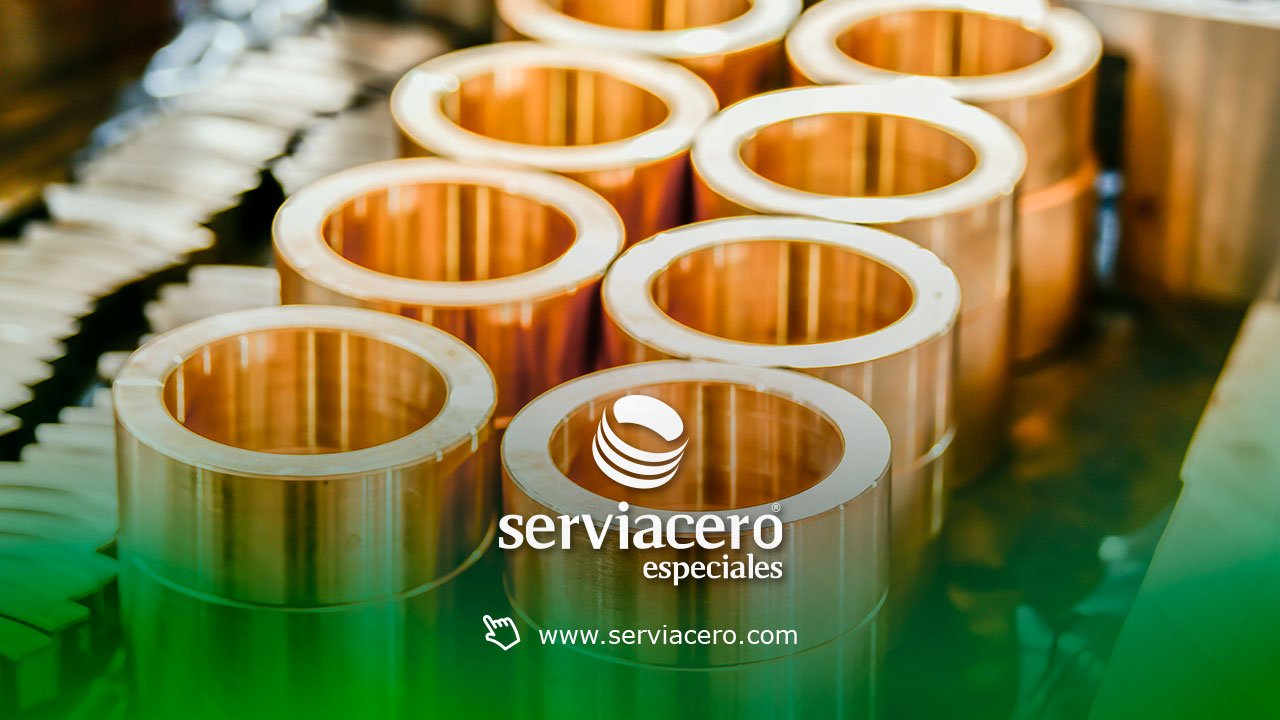
Conoce más sobre las aleaciones de cobre ¿Sabías que la mayoría de los metales no se usan en un estado puro, sino que son mezclados con otros? este proceso denominado aleación se basa en combinar dos o más metales para lograr que sean más duros o resistentes.
Las diferentes aleaciones de cobre coinciden, según sus composiciones, en las características técnicas que se obtienen. Esto facilita que se pueden utilizar en numerosos objetos con aplicaciones muy variadas.
Descrito lo anterior podemos aterrizar que una de las principales aleaciones del cobre es el bronce, el cual se obtiene cuando al cobre le añadimos estaño, esta aleación que cuenta con un 75% a 88% de cobre se caracteriza por tener:
- Color amarillento
- Resistencia a los agentes atmosféricos.
- Resistencia a los esfuerzos mecánicos.
Otras aleaciones de cobre
Existen otras aleaciones metálicas que se destacan por sus propiedades únicas, como el bronce al aluminio, el cual, como su nombre lo sugiere, es el resultado de la adición de aluminio al cobre. Esta combinación de metales no solo potencia las características mecánicas de cada uno, sino que también crea una aleación resistente y versátil.
El origen del bronce al aluminio se remonta a la antigua China, donde se descubrió su capacidad para mantener un brillo característico, lo que lo hacía ideal para fabricar objetos decorativos y utilitarios. Con el paso del tiempo, esta aleación ha demostrado una excepcional resistencia a la corrosión, incluso cuando se expone a una variedad de condiciones atmosféricas adversas, como ambientes marinos o industriales. Esta resistencia, sumada a su durabilidad, lo convierte en un material de elección para aplicaciones que requieren longevidad y confiabilidad.
Entre sus principales usos de las aleaciones de cobre en la actualidad se encuentra la fabricación del tren de aterrizaje de los aviones, una aplicación crítica en la industria aeroespacial debido a las exigencias mecánicas que enfrenta esta parte de la aeronave. El bronce al aluminio destaca en este sector gracias a su combinación de resistencia a la corrosión y a su capacidad para soportar cargas elevadas, lo que garantiza un rendimiento óptimo bajo condiciones extremas, como el aterrizaje en diversas pistas y la exposición constante a los elementos. Sin embargo, su uso no se limita exclusivamente a la aeronáutica.
En la industria metal-mecánica, esta aleación es igualmente valorada por sus propiedades mecánicas superiores. Se utiliza en la fabricación de engranajes, bujes y otras piezas que deben resistir el desgaste y la fricción en condiciones exigentes.
En cuanto a las normas que rigen las especificaciones técnicas para las aleaciones de cobre, es importante hacer referencia a estándares internacionales que establecen los requisitos de calidad para productos fabricados a partir de aleaciones de cobre. Uno de los más importantes es la norma ASTM B505, la cual especifica los requisitos para varillas, barras, tubos y perfiles de colada continua fabricados con este tipo de aleaciones. Esta norma asegura que los materiales cumplan con los criterios necesarios en cuanto a composición, propiedades mecánicas y resistencia a la corrosión, garantizando así su desempeño en diversas aplicaciones industriales y estructurales.
Las aleaciones de cobre, además de su durabilidad y resistencia, posee una maquinabilidad adecuada, lo que facilita su manipulación en procesos industriales, permitiendo su conformado en una amplia variedad de formas y tamaños, tales como tubos, barras o perfiles especializados. Esto lo convierte en una opción versátil y valiosa para ingenieros y diseñadores que buscan materiales capaces de soportar condiciones exigentes sin comprometer la integridad estructural ni la calidad estética.
La fabricación de bronces bajo esta norma por el proceso de colada continua nos puede otorgar las siguientes ventajas:
- Libre de porosidad.
- Mayor limpieza interior.
- Mejores características mecánicas.
- Mejor maquinabilidad.
- Tolerancias dimensionales más cerradas.
- Barras de mayor longitud.
En Serviacero Especiales, comercializamos Bronce estándar, comercial o fosforado, el cual tiene excelentes ventajas físicas, gran maquinado, resistencia a la tensión y al esfuerzo, recomendado para trabajos ligeros, la dureza de suministro está alrededor de ~ 65 HB 10/1000.
Además, distribuimos Bronce SAE 62, también conocido como Bronce C90500, es un bronce recomendado para usos generales que requieren: alta resistencia y trabajos pesados.
Ofrece una gran resistencia al desgaste por químicos y ácidos, y a la corrosión del medio ambiente, la dureza de suministro se encuentra entre ~ 75 a 110 HB 10/1000.
Mientras que el Bronce SAE 64, también conocido como C93700, es ideal para labores pesadas, su excelente antifricción le aporta las cualidades de lubricante en seco, la dureza de suministro de este oscila alrededor de ~ 65 HB 10/1000.
Para conocer más sobre las aplicaciones de este tipo de aleaciones de cobre comunícate al número y/o al WhatsApp 477 289 2613, o envíanos un correo a jose.aleman@serviacero.com estamos preparados para resolver tus dudas o cotizaciones.