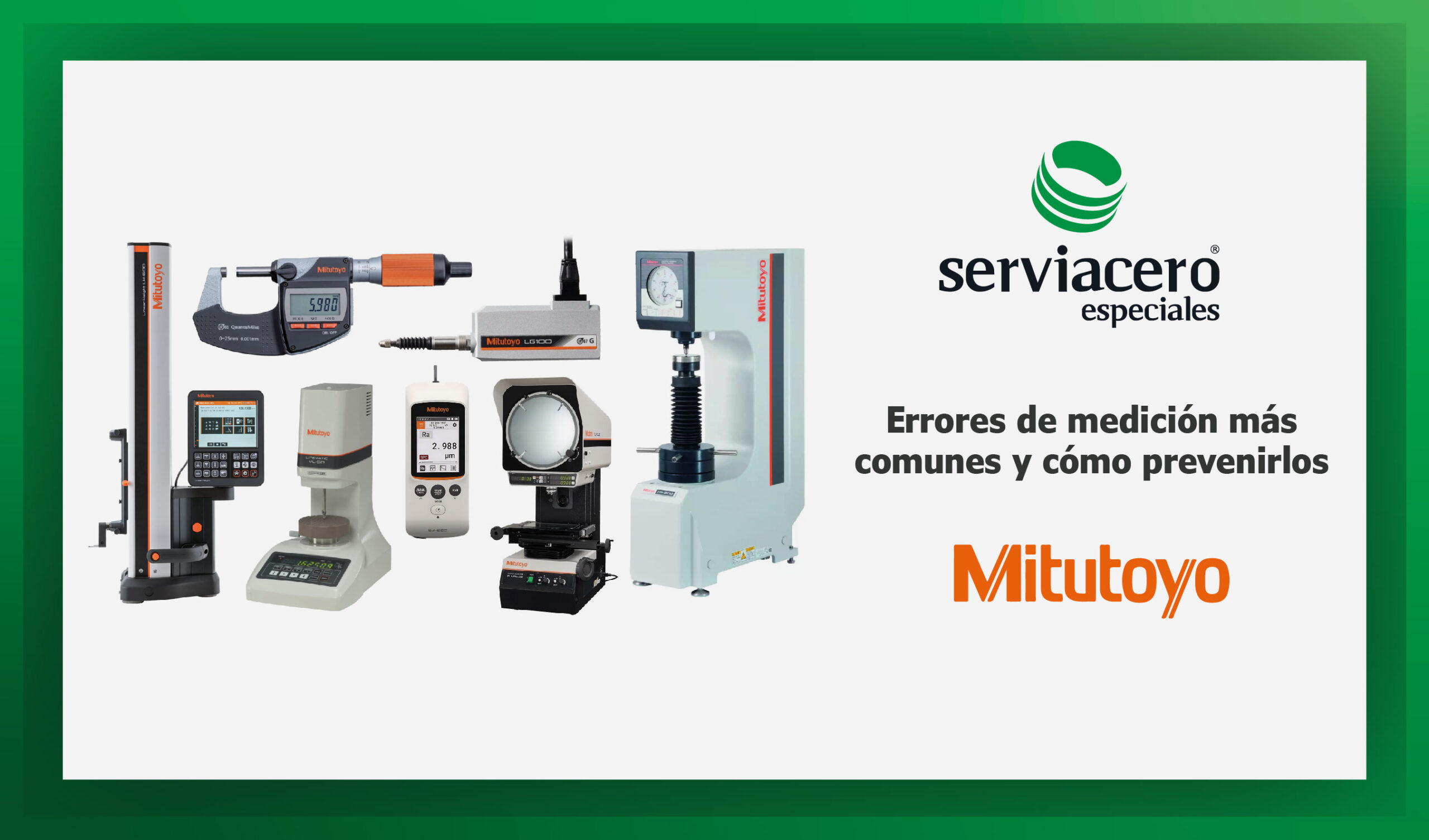
Errores de medición más comunes y cómo prevenirlos
En los procesos industriales, la precisión en la medición es un factor crítico que impacta directamente la calidad del producto final, la eficiencia operativa y la satisfacción del cliente. Sin embargo, incluso con equipos de alta precisión, es común que los operadores enfrenten errores de medición que pueden comprometer los resultados.Afortunadamente, muchas de estas fallas son evitables mediante buenas prácticas y el uso de tecnologías modernas como la transmisión de datos electrónica a través de los instrumentos como digimatic con conexión inalámbrica Bluetooth®, como los desarrollados por la marca Mitutoyo. A continuación, analizamos los errores de medición más frecuentes en la industria y las mejores formas de prevenirlos.
1. Errores por captura manual de datos
Uno de los errores más comunes ocurre durante la transcripción manual de medidas a hojas de registro o sistemas digitales. Este proceso, aunque tradicional, está altamente expuesto a:
Números transpuestos
Decimales omitidos
Datos duplicados
Omisión de lecturas
Errores por fatiga del operador
Estos errores no solo afectan la confiabilidad del control de calidad, sino que pueden generar costos adicionales en retrabajos, devoluciones o desperdicio de material.
Cómo prevenirlos estos errores de medición
La solución más efectiva es eliminar la entrada manual y sustituirla por sistemas de captura electrónica, como U-Wave de Mitutoyo, que transmiten los datos directamente del instrumento al PC, tablet o teléfono inteligente. Esto mejora drásticamente la trazabilidad y elimina la posibilidad de errores humanos en la transcripción.
2. Errores por uso inadecuado del instrumento
Incluso las herramientas más precisas pueden generar lecturas erróneas si no se utilizan correctamente. Entre los errores operativos más frecuentes se encuentran:
Lecturas incorrectas por mala posición del instrumento
Suciedad o rebabas en la superficie de la pieza
Instrumento descalibrado
Falta de experiencia o capacitación del operador
Cómo prevenirlos estos errores de medición por el uso inadecuado del instrumento
El entrenamiento es fundamental, pero también ayuda utilizar instrumentos diseñados para minimizar estos riesgos, como el micrómetro QuantuMike, que:
Ofrece alta velocidad con tornillo de avance de 2.0 mm, reduciendo el tiempo de aproximación.
Detecta colisión con la pieza, evitando daños y mediciones incorrectas.
Cuenta con funciones de juicio de tolerancia, notificación de error y fecha de calibración.
La combinación de diseño ergonómico y funciones inteligentes permite mediciones más confiables incluso en entornos exigentes.
3. Errores por conexiones difíciles o cables estorbosos
Los sistemas de recolección de datos por cable reducen los errores de captura, pero pueden presentar otras dificultades:
Cables que estorban el movimiento del operador
Riesgo de desconexiones accidentales
Limitación en la ergonomía de trabajo
Incremento de tiempos por manejo de cables
Cómo prevenirlos errores de conexión
Los sistemas inalámbricos como U-Wave Bluetooth® proporcionan la solución ideal al permitir:
Transmisión directa sin receptor adicional
Conexión simultánea de hasta siete unidades a una PC
Mayor flexibilidad operativa
Reducción de costos al usar los calibradores Digimatic existentes
Además, sus versiones con protección IP67 permiten uso confiable en ambientes sucios, húmedos o con presencia de polvo.
4. Errores de transmisión en entornos industriales ruidosos
Algunas tecnologías inalámbricas pueden sufrir interferencias, especialmente en plantas con maquinaria pesada o equipos electrónicos de alta potencia.
Cómo prevenirlos errores de transmisión
U-Wave Mitutoyo utiliza un estándar inalámbrico de alta estabilidad, probado incluso en condiciones adversas para asegurar una señal fuerte y confiable. Su diseño industrial garantiza continuidad en la transmisión de datos sin pérdidas, incluso en entornos complicados. Los errores de medición no son inevitables: la mayoría puede prevenirse mediante buenas prácticas, capacitación adecuada y el uso de tecnologías modernas de captura de datos. Sistemas como Mitutoyo U-Wave y herramientas avanzadas como QuantuMike permiten a las empresas incrementar la precisión, minimizar tiempos muertos, reducir errores humanos y mejorar la trazabilidad del control de calidad. En un mercado donde la competitividad depende de la exactitud y la eficiencia, invertir en medición inteligente no es solo una mejora operativa, sino una estrategia clave para garantizar productos de alta calidad y procesos más confiables. Visita nuestro sitio web para enterarte de más temas interesantes. Conoce más blogs en nuestras redes sociales.