
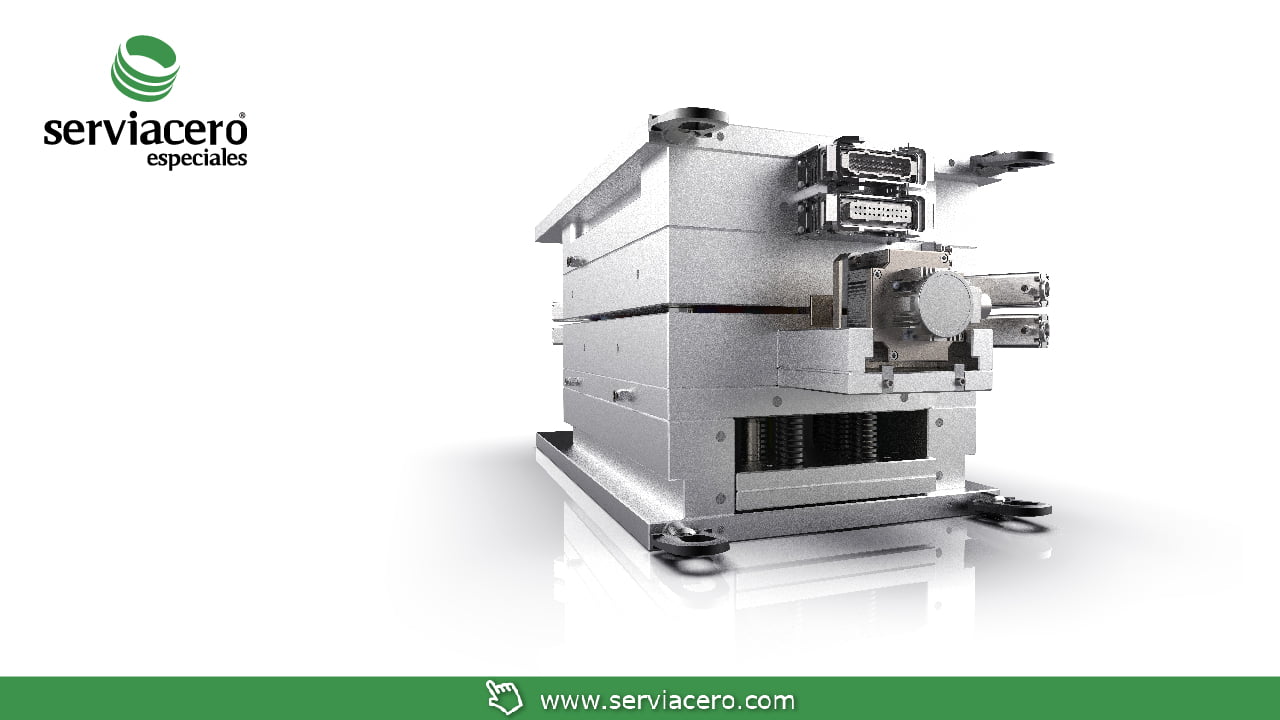
Para lograr y obtener el mejor desempeño del herramental, una vez seleccionado el acero adecuado, durante los procesos de fabricación deberán atenderse las siguientes recomendaciones, de otra manera los resultados podrían variar de forma considerable en su desempeño.
El maquinado debe realizarse bajo buenas prácticas para la remoción de material por acción de arranque de viruta; sugerimos tomar en consideración las recomendaciones de los fabricantes de herramientas, además de, los parámetros óptimos de maquinado, dado que podrían variar conforme condición metalúrgica del acero, tipo de máquina, sujeción de la pieza, tipo de herramienta de corte y estrategia de maquinado.
Si es corte en seco, recomendamos el uso de aire a presión para una eliminación eficaz de las rebabas.
Evitar el sobrecalentamiento de la superficie, así como no ejercer exceso de presión en la remoción de material.
Evitar esquinas o cantos “vivos”, ángulos agudos y enterrones de herramienta de corte.
Evitar marcas o irregularidades que aumenten la posibilidad de tensiones.
Evitar hendiduras agudas en frío, rayas, golpes, etc.
Cambios bruscos de sección y/o volumen.
El acabado superficial debe ser lo menos burdo posible, con la finalidad de evitar distorsión y generación de fracturas durante el proceso de tratamiento térmico de temple y revenido.
Eliminar defectos superficiales, tales como, descarburación, grietas, traslapes, etc., todas ellas, imperfecciones inherentes a los procesos de conformado mecánico en caliente del acero (forja o laminación), para lo cual, sugerimos basarse en lo establecidos por normas internacionales, como ASTM A 681 (sobrematerial para maquinado por lado del 25 % mayor a la máxima profundidad de descarburización por lado).
Una vez realizado el proceso de maquinado burdo, si la cantidad de remoción de material es “considerable” (más del 25% en peso), es recomendable realizar relevado de esfuerzos o tensiones a fin de eliminar las mismas derivadas del trabajo mecánico (mecanizado); al hacerlo se disminuye fuertemente la posibilidad de distorsiones dimensionales mayores, así como, la posibilidad de fracturas durante o después del proceso térmico de endurecimiento (temple y revenido).
La temperatura para el relevado de tensiones deberá ser seleccionada una vez conociendo la condición previa de tratamiento del acero:
Aceros en condición de recocido: la temperatura a usar deberá ser ≤ a 650°C.
Tiempo mínimo de permanencia 2 horas, adicionar 60 min / 25 mm excedentes de pared.
Aceros pretemplados (bonificados o tratados): 50°C por debajo de la última temperatura de revenido.
Referencia: ASM Metals HandBook Volume 16- Machining Processes
La correcta selección de parámetros de mecanizado dentro de los procesos se debe realizar a fin de “suavizar” la superficie y aproximar dimensionalmente la herramienta a su geometría y dimensiones de trabajo sin descuidar recomendaciones del proceso térmico.
Es aconsejable dejar un sobrematerial previo al tratamiento térmico de temple y revenido entre 1.5 a 5.0 mm por cada lado; cuando sea usado una mayor presión durante el temple en vacío, deberá incrementarse el sobrematerial, y esto depende del tamaño de la herramienta.
Considerar la siguiente práctica de estos procesos:
Atender las instrucciones de tratamiento térmico específicas para cada tipo de acero y dureza en función de su aplicación y/o característica o propiedad a destacar o prevenir.
Considerar sobrematerial, evitar someter a proceso las piezas en medidas finales.
Preferible realizar relevado de esfuerzos (estabilizado) posterior a la operación de maquinado burdo.
Contar con el equipo o controles que aseguren la correcta temperatura del horno y la pieza.
No es recomendado acelerar el proceso térmico.
El primer revenido debe ser inmediato al temple (enfriamiento súbito desde temperatura de austenización); no permitir por ninguna razón que la pieza llegue a temperatura ambiente.
Detener el enfriamiento entre 70 a 80°C.
Mantener a temperatura de primer revenido mínimo 2 horas, adicionar 60 min / 25 mm excedentes de pared y posterior enfriamiento a temperatura ambiente.
Evaluar dureza en frío (temperatura ambiente).
Proceder con segundo revenido a temperatura seleccionada para establecer la dureza deseada.
Tiempo mínimo de permanencia 2 horas, adicionar 60 min / 25 mm excedentes de pared.
En aceros de alta aleación o aceros de alto desempeño, siempre será recomendable un tercer revenido para eliminar cualquier rastro de austenita retenida.
Es importante considerar dentro de los procesos que, aunque las ventajas de maquinado por electroerosión facilitan operaciones de maquinado y/o geometrías muy complejas, la propia operación, por las temperaturas que se generan durante el proceso, provocan cambios superficiales en los herramentales (fusión, retemplado del acero y tensiones), mismas que pueden poner en riesgo el desempeño antes y durante la puesta en operación, por ello recomendamos la siguiente práctica a fin de proteger y reducir el riesgo de fallas (grietas y fractura).
Recomendable que la operación se realice en piezas previamente endurecidas, con la finalidad de generar piezas finales con variaciones dimensionales mínimas y satisfactorias.
En corte por hilo, hacer perforaciones para unir cortes y así disminuir tensiones durante el corte por efecto de eliminar concentradores de esfuerzos en secciones gruesas.
Terminar la operación con erosionado fino, varias etapas, evitar erosionado burdo, modificar intensidad y frecuencia.
Consultar a su proveedor / representante de la marca a fin de obtener los parámetros más adecuados para lo sugerido en esta sección.
Eliminar la capa superficial afectada mediante pulido o rectificado mecánico
Realizar proceso térmico de relevado de esfuerzos o tensiones adicional y al término de la operación por EDM.
Disminuir la posibilidad de distorsiones mayores, así como la posibilidad de fracturas durante la operación o inclusive antes de ésta.
Incremento en el tiempo de vida de los herramentales.
Solo el tiempo para llevarlo a cabo.
Una vez hecha la remoción mecánica de la superficie (pulido o rectificado), someterlo a calentamiento en un horno, incluso puede ser en un horno convencional, y elevar la temperatura hasta 50°C por debajo de la última temperatura de revenido con la cual fue establecido la dureza de la herramienta.
Muy importante mantener los registros de las temperaturas del proceso de tratamiento térmico de temple y revenido.
El tiempo de permanencia deberá de ser de al menos 2 horas una vez que se ha alcanzado la temperatura deseada, adicionar 60 min / 25 mm excedentes de pared.
Después de este tiempo, la pieza puede ser enfriada a temperatura ambiente.
Termine la herramienta a dimensiones finales y acabado superficial deseado.
Referencia: ASM Metals HandBook Volume 16- Machining Processes.
Toda vez que las herramientas han trabajado, hay que considerar que los herramentales, por su naturaleza almacenan energía de trabajo llamado “esfuerzos o tensiones residuales”, y que, durante las corridas o trabajo mecánico no siempre la energía de trabajo es disipada por la herramienta, por lo que, la energía almacenada es generadora de fallas, tanto de superficie (fatiga térmica), como internas (generadores de fisuras), es decir, de no eliminar los esfuerzos residuales de trabajo, limitarán la tenacidad demeritando el desempeño de la herramienta.
Hay que asegurar que la herramienta esté en condiciones de continuar con ciclos o corridas de producción en los procesos, es decir, que por lo menos, superficialmente no presente daños, fallas que pongan en riesgo tanto al operador, la operación, el equipo y el producto, asegurar que esté libre de fisuras, de lo contrario corregir el daño.
Verificar y asegurarse de conocer la temperatura empleada en el revenido con el cual fue establecida la dureza de uso y someterla a una temperatura de 50°C por debajo de ésta.
Tiempo mínimo de permanencia 2 horas, adicionar 60 min / 25 mm excedentes de pared.
Nota: Si los herramentales presentan fisuras superficiales (fatiga térmica), es necesario su eliminación antes de realizar el relevado de tensiones, de lo contrario, esta acción acelerara la generación de fracturas.
Después de este tiempo, la pieza puede ser enfriada a temperatura ambiente.
Otra práctica para eliminar esfuerzos o tensiones residuales, es con trabajo mecánico vibratorio, el proceso es lento y se emplea cuando no se cuenta con hornos para el fin.
Toda vez que las herramientas han trabajado, y posterior al mantenimiento, las herramientas se deberán conservar limpias y secas, ya que son susceptibles a oxidación y corrosión, por ello, hay que almacenarlas en lugares secos y evitar que estén expuestas a condiciones de humedad.
La gestión de los procesos adecuada y minuciosa de la vida de la herramienta debe ser considerada como parte integral del funcionamiento cotidiano de los herramentales.
A pesar de que las situaciones de emergencia siempre se producen, un mantenimiento programado reduce drásticamente tanto la ocurrencia de fallas, como de eventos fortuitos.
Referencia: ASM Metals HandBook Volume 16- Machining Processes
Conoce más temas interesantes dentro de nuestro sitio web oficial. Sigue nuestra página de LinkedIn para que puedas estar informado de nuevos blogs.